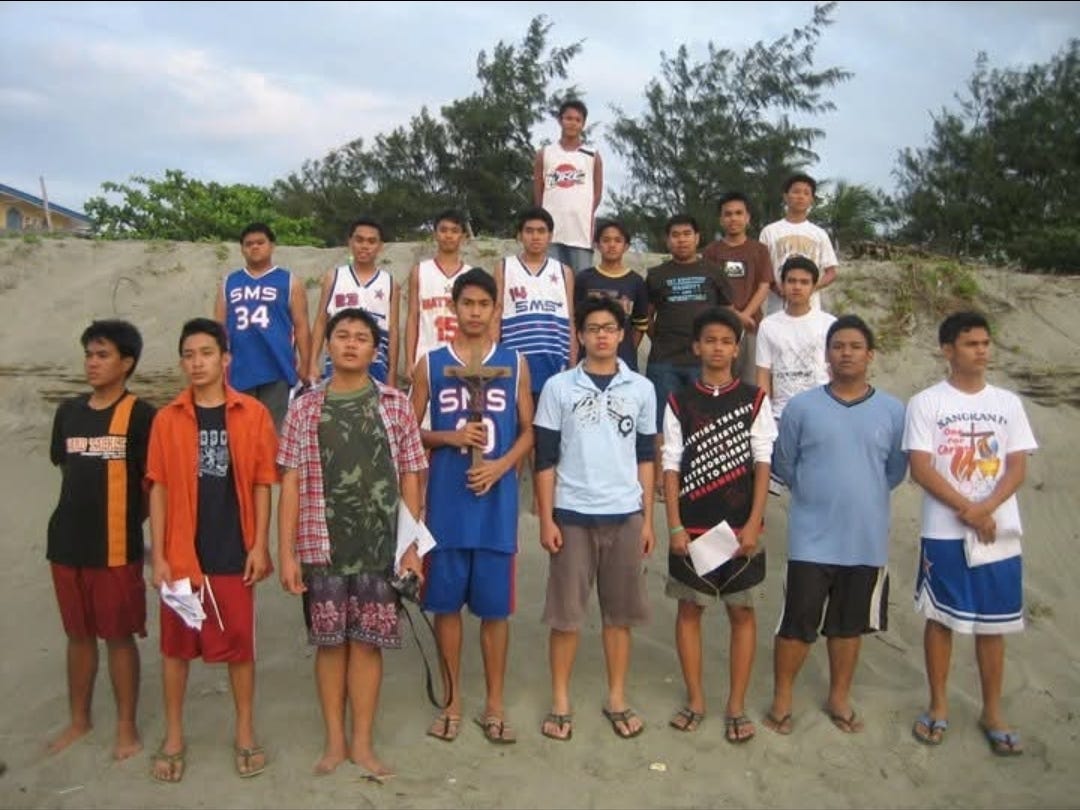
A Look Inside Seminary Life
From the eyes of an 11-Year-Old Recruit

I was 11 when I was sent to the seminary, an all-boys school designed to guide young men toward the path of priesthood. Part of the reason I signed up was because of my friends who were persuaded to join. The seminary and the Church’s recruitment campaign were highly effective, drawing many of us in.
The process was quick. I took the entrance exams, passed, took a personality test, and was interviewed. The next thing I knew, I had all my clothes packed up, ready to leave my family and the life of a normal kid behind.
The first day was awkward. Aside from my two friends, I didn’t know anyone. I observed the dormitory as I was unloading my suitcase and noticed the other kids around me. They all came from different corners of the province I lived in, far removed from the city kids I had known throughout my elementary education. Many of them were the sons of farmers, fisherfolk, overseas laborers, and church workers. Unlike my former schoolmates — children of wealthy families, politicians, and businesspeople, these kids came from humble backgrounds.
Some of them were so financially challenged that the local clergy, supported by priests and the Church, sponsored their arrival and enrollment into the school.
There were about 90 to 100 kids enrolled during my first year in the seminary. 35+ freshmen, 30+ sophomores, 20 juniors, and 12 seniors.
Here’s what our weekday schedule looked like:
05:30 AM: Wake up, brush teeth, shower, and get dressed for early morning Mass.
06:30 AM: Breakfast (white rice, a protein, soup, and a hot drink).
07:30 AM: Morning classes, the usual GE subjects like Math, Science, and English.
Or:
History and Social Studies focused on Southeast Asian culture, and studies focused on local, folk, and national culture.
11:30 AM: Midday prayers.
11:45 AM: Lunch.
12:30 PM: Siesta or noontime nap/rest period.
01:15 PM: Afternoon classes; Latin or Spanish languages, Christian Living, Good Manners and Right Conduct.
Or:
Music and Arts, Home Economics, or Physical Education.
04:30 PM: End of classes.
04:45 PM: Indoor housework.
After classes, we cleaned. Each of us was assigned to a station. I was tasked to clean the men’s communal washroom on the ground floor, and sometimes the dining hall, along with other students.
05:30 PM: Free time (do anything you want.)
06:00 PM: Showers.
06:30 PM: Evening prayers.
06:45 PM: Dinner.
08:00 PM: Study period.
09:30 PM: Bed preparations.
10:00 PM: Lights off.
And repeat.
On Thursdays after classes, we cleaned outdoors, we cut grass manually with sickles or machetes, raked and gathered fallen leaves, dug holes, and burned the leaves and grass in them.
The school grounds were about four football fields in size, surrounded by trees, foliage, and tall, thick grass to trim under the scorching sun. Sometimes we had to be wary of snakes, but luckily, only one person was reported bitten during my time there.
We prayed about 7–8 times on a regular weekday and more on Sundays. We observed Silencio Magnum (Great Silence), which meant talking was not allowed after dinner every day except Friday and Saturday.
We could not say curse words or foul language, or we would be punished. (I remember seeing someone gargle dish soap because they said his mouth was filthy from uttering foul language.)
We could not address anyone by their given name; we called each other brother.
Our fingernails were checked every Monday.
Lockers were checked for orderliness every Wednesday; clothes had to be ironed and folded properly.
Beds had to be neatly made every morning. If not, your bed and all its articles would be flipped onto the floor.
Hair should not touch the collar of our shirt, the tips of our ears, or eyebrows, but also cannot be cut too short.
Shoes had to be shined and polished. Ears were swabbed for cleanliness before classes.
Clothes had to be neatly ironed, pants properly hemmed, no oversized clothing, and ripped or distressed styles were not allowed.
Fighting was allowed as long as it was agreed upon by both parties.
A fight would occur under the supervision of someone more senior than both participants.
A fight was considered acceptable only if both parties wore boxing gloves; otherwise, both would be punished with indoor housework or by kneeling while eating dinner.
You could not challenge someone older than you in a fight; it was considered disrespectful.
After freshman year, you would be assigned a neophyte brother, a newbie to teach and guide, just as someone had done for you when you were a freshman.
Depending on your standing during your junior year, a senior would be chosen to mentor you. After he graduated, you would inherit his status and take over his duties.
Duties of a senior seminarian:
At the beginning of every school year, four senior seminarians were chosen to become the highest-ranking individuals called Beadles — the “big brothers” — and another four as Vice Beadles. Every week of the month, the Beadle acted as an extension of the Rector (the head of the seminary). He was in charge of ensuring that the community within the seminary ran smoothly and efficiently.
When things went wrong during the week, the Beadle in charge would be punished and bear all consequences.
Negative things I realized about seminary life
You get indoctrinated. I was made to believe that priesthood was my calling — because the seminary was exceptional at recruiting and taking care of its flock. But there was an agenda behind it.
As a sponsored student, your benefactors covered everything — your education, board, and lodging — in exchange for your loyalty. You became their ward, expected to follow their path. This often meant becoming a deacon within the diocese your benefactor belonged to. After being ordained as a deacon, you’d have a year to decide whether to fully commit to priesthood or leave.
You grow up away from your family. Instead, you grow up alongside your brothers and the priests tasked by the diocese to guide the students.
You don’t get to be a normal kid. You lead a life much different from teenagers outside seminary life — they hang out with friends of both sexes, get weekends off, go to parties, shop at malls, watch the latest shows, and follow trends. We got none of that.
Only every third Sunday of the month were we allowed to go to the nearest town to buy necessities like toiletries or school supplies. You could either go yourself or ask your brother to buy things for you.
We only ate what was served. A protein, a vegetable dish, and white rice. No fancy food, except when we got donations or when someone celebrated a birthday.
No opportunity to mingle with the opposite sex.
Physical punishment was a norm in the culture of men where I grew up. It was acceptable to be slapped or punched by anyone with seniority, within reason, of course. You acted stupid, you got hit, and we’d laugh about it. It wasn’t considered bullying if it was warranted, maybe you even deserved it.
Positive experiences
You’re always on schedule. Everything you do is planned; only the outcomes differ.
You learn independence at a young age, how to properly fold clothes, make your bed, wash your clothes by hand, cook, clean, and be organized.
People depend on you for a lot, and your brothers are always there to help because people depend on them, too.
Aside from studying, praying, or doing chores, the only entertainment came from musical instruments, sports, indoor and outdoor games, the library, or chatting with your brothers.
Examples:
Indoor sports: Chess, checkers, general strategy board games, pool, table tennis, darts, billiards, weightlifting, and martial arts.
Outdoor sports: Basketball, volleyball, track, soccer, badminton, tennis.
Instruments: Guitar, piano, drums, singing.
You get to bond and spend a lot of time with your brothers, forging long-lasting friendships.
When I finally graduated from the seminary, the priests asked if I wanted to move on to the next stage and pursue theology. I refused. Except for one, all of my classmates went on and took the entrance exam for the Majors.
Here’s how it ended:
As freshmen, there were 34 of us. 27 in the year after, 20 in the third year, and 18 in our final year. We were just a bunch of kids when we first got there. I remember consoling a boy, telling him to stop crying as we watched his mom leave for the United States; it felt like she was depositing him there. I remember my childhood friend getting expelled, and another one not returning in the third year.
As children, we stepped into the unknown, but 18 of us emerged as somewhat adults. Only one became a priest; my bunkmate, who became the Rector of our former institution, hoping to lead young boys into the life of priesthood.
Will you have the guts to send your 11-year-old boy away, never to see him grow? I wonder if our parents really loved us back then, or maybe it was because they loved us that they were willing to send us away to grow on our own.